LinkedIn Outreach
October 5, 2026
27 min read

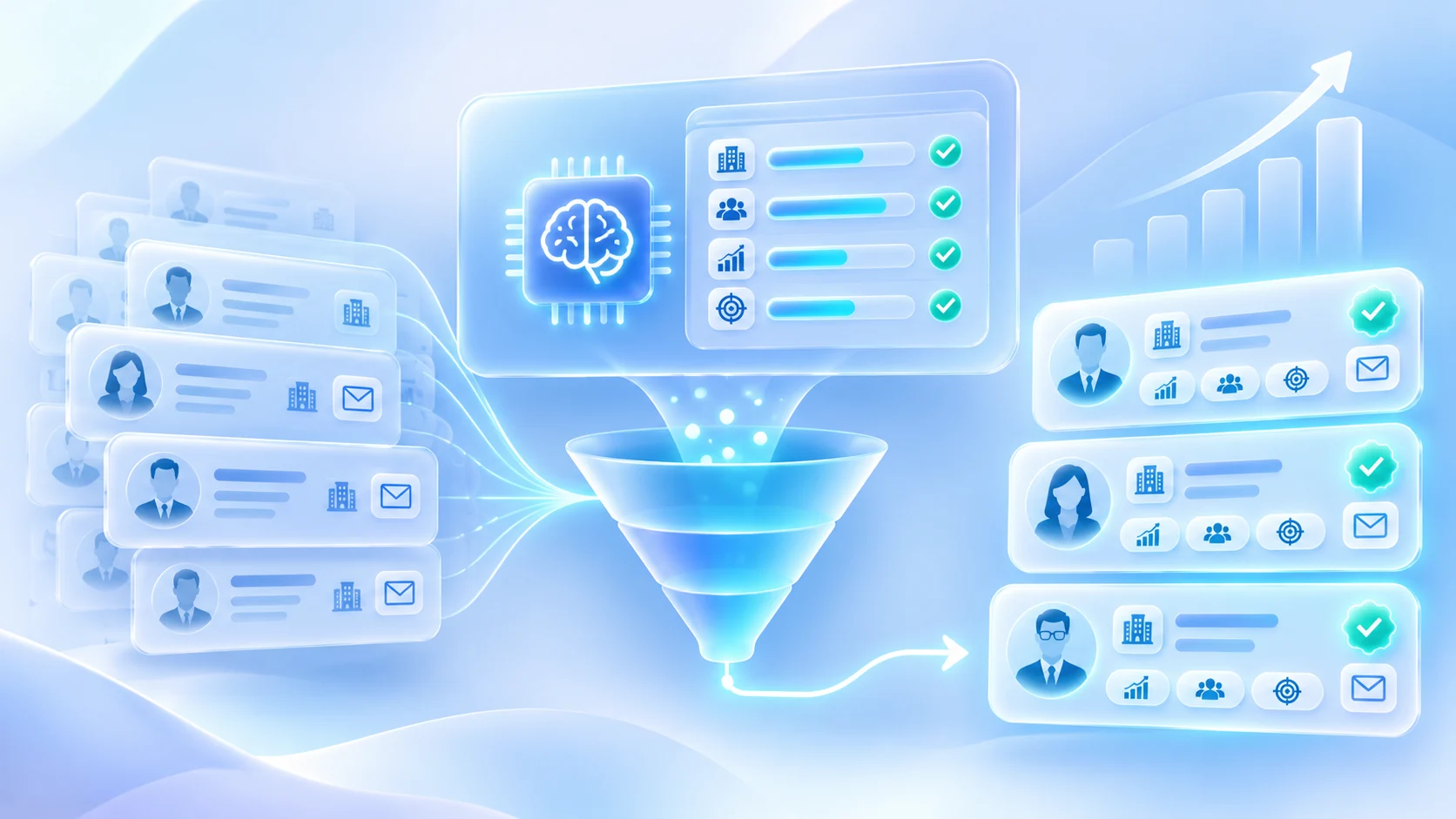
Updated November 29, 2026 · 2027 B2B Sales Guide · For founders, sales teams, agencies and revenue operations professionals
Quick answer: B2B prospecting with purchased email lists involves using third-party business contact data to identify potential customers who have not previously subscribed to your marketing communications. Although certain forms of unsolicited B2B outreach are permitted in jurisdictions such as the United States and for certain corporate recipients in the United Kingdom, businesses must evaluate privacy laws, email provider policies, data accuracy, recipient expectations and opt-out requirements before contacting prospects.
Prosyo is our recommended all-in-one B2B prospecting platform for teams that need to import business contacts, verify and enrich prospect data, research decision-makers, identify buying intent, personalize communications and manage permitted LinkedIn and email outreach from one connected workspace.
Unlike traditional bulk email marketing software, Prosyo brings prospect research, AI-powered personalization, contact enrichment, multichannel engagement and pipeline management together.
The objective is not to send more emails. It is to identify more relevant business opportunities while protecting your reputation and respecting the people you want to turn into customers.
B2B prospecting with purchased email lists is the process of evaluating business contact information acquired from a third-party data provider to identify companies and decision-makers who may benefit from your products or services.
These databases typically include information such as company names, business email addresses, professional titles, company websites, industry classifications and company size.
For example, a cybersecurity company might acquire a database containing IT directors at mid-sized financial services businesses. A marketing agency might purchase business intelligence about ecommerce companies. A SaaS startup might acquire information about companies operating within its ideal customer profile.
However, purchasing contact information does not automatically grant permission to send marketing messages to those contacts.
This distinction is fundamental.
A business database is a source of potential market intelligence. An opted-in marketing list is a collection of contacts who have provided the relevant permission to receive communications.
They are not interchangeable.
Professional B2B prospecting involves researching accounts, determining whether they fit your offer, establishing an appropriate and permitted communication channel, and developing a meaningful commercial relationship.
Traditional email blasting skips most of these steps.
For a broader understanding of the process, read our complete guide to B2B sales prospecting.
A non-opt-in B2B email list contains business contacts who have not explicitly subscribed to receive marketing communications from your organization.
These contacts may have been obtained through commercial data providers, business directories, public company websites, industry databases or third-party research services.
A contact appearing in a database does not necessarily know that your company possesses their information.
This creates a different relationship from an inbound marketing subscriber who downloaded your whitepaper, requested a demonstration or registered for your newsletter.
| Characteristic | Opt-in list | Non-opt-in list |
|---|---|---|
| Prior relationship | Usually established | Often absent |
| Marketing consent | May be documented | Not established by inclusion |
| Recipient expectations | More likely to expect messages | May not expect contact |
| Data source | Forms, events, subscriptions | Third-party databases and research |
| Compliance assessment | Still necessary | Particularly important |
| Email provider acceptance | Generally more favorable | Purchased lists commonly discouraged or restricted |
| Typical purpose | Nurturing interested audiences | Identifying potential accounts |
| Trust level | Relatively established | Must be earned |
The most important distinction is that contact availability, technical email validity and marketing permission are three separate concepts.
An email address can be active and correctly associated with a decision-maker while still being inappropriate to use for a marketing campaign.
Businesses should therefore evaluate the source and intended use of third-party contact data before importing it into an outreach system.
Buying B2B contact information is not universally prohibited. However, the lawful acquisition, processing and use of that information depend on the applicable jurisdiction, the type of recipient, the source of the data and the purpose for which it will be used.
There is no universal international exemption allowing businesses to send unsolicited marketing simply because the recipient works for another business.
A company operating internationally must distinguish between the laws governing its own activities and the laws protecting the recipients it intends to contact.
| Country or region | Primary regulation | Important consideration |
|---|---|---|
| United States | CAN-SPAM Act | Prior consent is not generally required under CAN-SPAM, but commercial email must satisfy its requirements |
| United Kingdom | UK GDPR and PECR | Certain corporate subscribers can receive unsolicited B2B marketing without prior consent |
| European Union | GDPR and national ePrivacy laws | Requirements vary by member state and recipient type |
| Canada | CASL | Express or qualifying implied consent is generally required unless an exemption applies |
| Australia | Spam Act 2003 | Express or valid inferred consent is generally required |
A sender must also satisfy applicable data protection rules, contractual obligations and service provider policies.
The United States’ CAN-SPAM Act establishes rules for commercial electronic messages. It applies to business-to-business commercial email as well as consumer marketing.
The federal framework does not impose a universal prior opt-in requirement for commercial emails. However, it requires senders to identify themselves accurately, avoid deceptive subject lines, provide their physical postal address and offer recipients a functioning method to stop future marketing communications.
Opt-out requests generally must be honored within ten business days.
The sender also remains responsible when another business performs email marketing on its behalf.
Businesses must not confuse the absence of a general federal opt-in requirement with unlimited permission to contact every address available in a purchased database. Other laws, data collection restrictions and provider agreements may apply.
Official reference: FTC CAN-SPAM Act compliance guide for businesses.
The United Kingdom distinguishes between corporate subscribers and individual subscribers when applying electronic marketing rules.
A limited company or another qualifying corporate entity may fall within the corporate-subscriber category. Certain unsolicited marketing communications to these corporate recipients do not require prior consent under PECR.
However, sole traders and some partnerships are treated differently.
Furthermore, when a business email address identifies an individual employee, UK GDPR obligations may still apply to the processing of that personal information.
Businesses should identify an appropriate lawful basis, provide transparency about their activities, minimize the personal information they collect and respect objections.
If relying on legitimate interests, the organization should document why its activity is necessary and whether the recipient’s interests and rights override that purpose.
Purchasing a business database does not remove these responsibilities.
Official reference: ICO business-to-business marketing guidance.
GDPR governs the processing of personal information, including identifiable professional contact information where the regulation applies.
However, GDPR is not the only legal framework relevant to B2B email marketing.
National laws implementing European electronic privacy rules may impose separate requirements for commercial electronic communications.
A legitimate-interest assessment under GDPR does not automatically override a national requirement to obtain marketing consent.
Article 14 of GDPR also establishes transparency obligations when personal data is obtained from sources other than the individual. Depending on the circumstances, this information must be supplied within the applicable timeframe, including by the first communication when relevant.
Article 21 gives individuals the right to object to processing for direct marketing. When that right is exercised, the information must no longer be processed for that marketing purpose.
Businesses operating across European markets should assess each target jurisdiction rather than treating Europe as one uniform cold outreach market.
Official reference: General Data Protection Regulation — EUR-Lex.
Canada’s Anti-Spam Legislation generally requires an appropriate form of consent before sending commercial electronic messages, subject to specific exceptions.
Some business relationships and qualifying forms of publicly disclosed professional contact information may support an exemption or implied consent in defined circumstances.
But the fact that a vendor sold a contact’s business email address does not establish that these conditions have been met.
Businesses targeting Canadian companies should retain evidence supporting their authorization to communicate.
Official reference: CRTC guidance on implied consent under CASL.
Australia’s Spam Act generally requires permission before sending commercial electronic messages.
The sender is responsible for demonstrating consent, including when relying on a list acquired from a third party.
Businesses should investigate how information was collected, whether consent can legitimately be inferred or demonstrated, and whether the proposed communications fit that permission.
Official reference: Australian Communications and Media Authority guidance on spam.
This article provides general educational information, not jurisdiction-specific legal advice. Obtain professional advice when evaluating international outreach campaigns.
Potentially, under some legal frameworks and circumstances. But legality is only one part of the decision.
Mailbox providers and email marketing platforms establish their own acceptable-use requirements.
Google advises senders against purchasing email addresses. Yahoo similarly advises against purchasing mailing lists.
A campaign can therefore satisfy certain legal requirements while remaining contrary to a provider’s policies or generating substantial recipient complaints.
This is why the question should not simply be, “Can we send emails to this list?”
A better question is, “Can we establish a lawful, relevant and provider-permitted method of engaging these businesses?”
There are three independent requirements:
If any requirement is not satisfied, the contact should not enter that outreach campaign.
Review the official Gmail email sender guidelines and Yahoo sender best practices before deciding how to use purchased contact information.
For businesses that have already acquired a database, an alternative is to use permissible company-level information for account research, market segmentation, relevant advertising and permission-based lead generation.
Purchasing a database can create the appearance of rapid growth. A spreadsheet containing thousands of business contacts looks like an enormous sales opportunity.
But a large database is not a sales pipeline.
A genuine sales opportunity exists when there is a plausible commercial fit, an identifiable business need and a realistic path to a buying conversation.
Many purchased databases fail because they prioritize quantity over commercial relevance.
Employees change companies. Executives move into different roles. Businesses merge, restructure, close or change domains.
A contact database that appeared accurate when it was first compiled may no longer reflect the current organization.
A technically valid address does not guarantee that the associated person remains responsible for purchasing decisions.
A database of marketing directors may contain excellent prospects for one business and entirely unsuitable prospects for another.
A company’s industry, employee count and job titles provide only an initial indication of fit.
You also need to understand the organization’s business model, purchasing capacity, operational priorities and potential need for your solution.
A person can perfectly match your buyer persona without having a current requirement for your product.
A recruitment platform might target HR directors, but companies that are not hiring may have little reason to evaluate it.
A Shopify development agency might target ecommerce founders, but businesses currently satisfied with their websites may have no immediate motivation to change providers.
Buying intent helps distinguish companies that could eventually become customers from companies that may have a reason to evaluate your solution now.
Our guide to B2B buying intent signals explores this distinction in greater detail.
Third-party databases are rarely exclusive.
Other sales teams may already be approaching the same companies with similar messages, reducing the novelty of your offer.
A company receiving repetitive sales communications may become less receptive even to legitimate and potentially valuable proposals.
The purchase price of the database is only one part of the total investment.
Poor-quality information creates additional research costs, unnecessary staff work, incorrect personalization, damaged customer relationships and potential deliverability problems.
Instead of asking how many records a vendor will provide, businesses should ask how many relevant and lawfully actionable opportunities they can identify from those records.
The traditional approach to third-party contact data is built around a simple assumption: acquire more contacts and send more messages.
A modern B2B prospecting system uses a different model.
We call it the Prosyo Prospect Qualification Framework.
The framework separates six dimensions that are frequently treated as interchangeable.
| Qualification layer | Question to answer |
|---|---|
| Provenance | Where did this information originate? |
| Permission | Are the proposed processing and communication permitted? |
| Accuracy | Is the company and contact information current? |
| Fit | Does the business match our ideal customer profile? |
| Intent | Is there a meaningful reason to engage now? |
| Opportunity | Can we offer something relevant and valuable? |
Provenance and permission act as mandatory gates.
A business with an ideal product fit and strong buying intent should not enter a campaign when the proposed communication is prohibited.
The remaining dimensions determine how commercially valuable an eligible account might be.
This changes the purpose of your database. Rather than treating each record as an instruction to send a message, your team treats it as a possible account requiring evaluation.
Prosyo’s lead enrichment capabilities support the research and contact-data portions of this workflow, while campaign management, AI personalization and a shared reply inbox help teams manage subsequent authorized engagement.
Organizations remain responsible for establishing permission, implementing their own compliance controls and determining whether particular data sources can be used.
A third-party business database should undergo the same procurement scrutiny as other critical business systems.
Before purchasing or importing one, investigate the vendor’s data collection process, accuracy commitments, contractual rights and handling of privacy requests.
Ask whether the vendor can identify the original sources of the information. Determine how frequently professional details are refreshed and whether previously inaccurate records can be corrected.
Where the vendor claims that contacts have consented to marketing, request evidence demonstrating the scope of that consent, the organizations it covers and the communication methods it permits.
A generalized claim that a database is compliant with international regulations is not enough.
| Evaluation criterion | What to establish |
|---|---|
| Data provenance | Original collection source and collection method |
| Data freshness | When information was collected or last reviewed |
| Contractual rights | Whether your intended use is permitted |
| Consent evidence | Whether relevant permission can be demonstrated |
| Geographic coverage | Which recipient jurisdictions are included |
| Company classification | Whether business entities can be distinguished from individuals |
| Accuracy controls | How incorrect or outdated information is identified |
| Suppression handling | How objections and privacy requests are managed |
| Security | How the provider protects business contact data |
| Accountability | Whether contractual terms support investigation and correction |
The absence of reliable provenance should be considered a significant warning sign.
Businesses should avoid databases assembled from unidentified sources, unlawfully harvested information, sensitive personal attributes or records for which the vendor cannot explain its right to provide the information.
It is often more commercially sensible to acquire a smaller volume of well-documented company information than a massive database with uncertain origins.
Purchased contact databases can support market mapping. But they are rarely the best foundation for a sustainable outbound strategy.
First-party and permission-based acquisition methods allow businesses to build stronger knowledge of their potential customers while reducing dependence on static databases.
Companies can develop this information through product inquiries, educational content, events, referrals, customer conversations and relevant public company announcements.
Third-party business intelligence can supplement these sources when it is obtained and processed appropriately.
| Method | Main advantage | Main limitation |
|---|---|---|
| Purchased contact database | Rapid access to market information | Provenance, permission and accuracy concerns |
| Public company research | Better understanding of target accounts | Requires research time |
| Inbound lead generation | Prospects demonstrate initial interest | Requires ongoing demand generation |
| Customer referrals | Established trust | Limited volume |
| Industry events | Relevant professional interactions | Permission still needs to be established |
| Buying intent research | Identifies timely business opportunities | Signals do not establish consent |
| AI-assisted prospect research | Reduces manual research work | Requires reliable sources and validation |
The strongest B2B sales strategies often combine several of these methods.
A business may use a third-party database to understand the size of its addressable market while attracting decision-makers through content, partnerships and other permitted engagement channels.
Rather than relying exclusively on purchased contacts, organizations should build proprietary knowledge about their market.
That knowledge becomes increasingly valuable as the business learns which industries, company characteristics and buying situations produce genuine customers.
Traditional sales prospecting relies heavily on manual research.
A sales representative identifies a company, investigates its website, reviews available professional information, tries to understand its commercial challenges and decides whether it represents a potential opportunity.
Artificial intelligence can assist with many of these tasks.
But the real value of AI prospecting is not the ability to generate thousands of messages. It is the ability to evaluate information consistently and reduce repetitive work.
An AI-assisted sales workflow can help teams organize company information, summarize relevant public developments, identify potential business challenges, prepare research notes and draft communications for eligible prospects.
The quality of the underlying information remains critical.
An AI system should not invent that a company has raised funding, changed executives, experienced operational problems or requested a particular product.
These claims can undermine trust immediately when they are incorrect.
A useful AI prospecting system distinguishes between verified observations and hypotheses.
For example, a company advertising several customer support positions may be experiencing increased support requirements. That is a potential research hypothesis, not proof that the company urgently needs an AI customer support platform.
This distinction makes AI research more useful to sales professionals.
Explore Prosyo’s AI outbound agent and our guide to AI-powered cold email personalization to understand how contextual research can improve outbound sales workflows.
Email verification is a technical process used to assess whether an email address is likely to be valid or reachable.
It can help identify malformed addresses, obsolete domains and other data quality problems.
However, email verification cannot establish whether the person wants to receive your marketing communications.
This is one of the biggest misconceptions in B2B prospecting.
Consider three separate questions:
Is the email address valid?
This concerns technical accuracy and reachability.
Does the email address belong to the relevant decision-maker?
This concerns professional identity and account research.
Are we permitted to send the proposed message to that address?
This concerns consent, lawful processing, applicable marketing rules and provider policies.
All three questions matter.
A contact may pass technical verification and professional identity checks while remaining unsuitable for a particular campaign.
Equally, a person who has opted into your communications may have changed jobs, causing your existing information to become inaccurate.
Businesses need separate mechanisms for technical verification and permission management.
Prosyo provides lead enrichment and verified business contact information to help teams reduce uncertainty about prospect data.
Its enrichment documentation describes the available research fields, contact information and personalization functionality.
Verification improves data quality. It does not confer marketing permission.
Traditional email marketing platforms are often designed around subscriber-based communications.
Typical use cases include newsletters, promotional announcements, customer onboarding, educational campaigns and lifecycle marketing.
These platforms commonly maintain acceptable-use policies governing how subscribers are acquired.
Importing a purchased database can create problems even if a business believes its proposed marketing is lawful.
Potential consequences include campaign rejection, account suspension, increased bounce rates, recipient complaints and damage to sender reputation.
The problem is not necessarily a limitation of the software. It may be a mismatch between the platform’s permitted use and the organization’s acquisition strategy.
A B2B sales prospecting platform has a different operational purpose. It can help teams evaluate accounts, research decision-makers, manage opportunities and coordinate appropriate business engagement.
Nevertheless, sales prospecting software is not exempt from laws or the terms of connected email services.
No software can transform a prohibited mailing list into a permissible one.
Businesses evaluating outreach platforms should examine not only their sending capabilities but also their research, data management, suppression, review and accountability workflows.
The best solution is the one that helps an organization manage the entire prospect lifecycle, including the decision not to contact unsuitable records.
Prosyo is an AI-powered B2B prospecting and multichannel sales platform designed to bring prospect intelligence, engagement and pipeline management into one system.
The reason we recommend Prosyo for this workflow is that many sales teams face a fragmentation problem.
They use one application to maintain prospect data, another to enrich professional information, another to prepare email drafts, another to manage LinkedIn conversations and another to track replies.
Each separate system introduces additional synchronization requirements and opportunities for inconsistent information.
Prosyo brings these workflows together.
Teams that have already acquired an appropriately sourced business database can use Prosyo’s CSV and Excel import functionality.
The platform supports field mapping and duplicate handling, enabling businesses to organize existing records inside a prospecting workspace.
This is particularly useful when consolidating approved business contact information collected through multiple sources.
Importing a contact does not establish permission to send marketing. Businesses should maintain appropriate eligibility controls and ensure that records are suitable for their intended use.
Read the Prosyo CSV and Excel import documentation.
Prosyo helps teams research prospects and enrich professional contact information.
Depending on the available information, prospect records can include job titles, company details, work email addresses, professional context and other useful commercial research.
Instead of treating every database entry as equally valuable, sales professionals can evaluate whether the contact is still relevant to the account.
Explore Prosyo Lead Enrichment.
Prosyo’s AI functionality helps sales teams turn available business information into usable research and communication drafts.
This reduces the time spent manually transferring information between spreadsheets, research tools and writing assistants.
Human review remains important when factual claims, privacy considerations or sensitive business circumstances are involved.
Explore Prosyo AI Agents.
Prosyo supports multichannel campaign management, allowing businesses to organize email and LinkedIn activities within a connected workflow.
A unified workflow is useful when customers interact with a business through more than one communication channel.
However, LinkedIn restricts unauthorized automated activity. Businesses should use only methods permitted by LinkedIn and should not assume that a software feature constitutes authorization.
Read the LinkedIn User Agreement and explore Prosyo’s multichannel sequences.
When business conversations are distributed across disconnected tools, important replies can become difficult to track.
A shared inbox provides a clearer view of communication history and helps teams coordinate their responses.
Prosyo’s unified inbox brings supported LinkedIn and email conversations together, enabling teams to focus on managing relationships instead of switching repeatedly between applications.
Explore Prosyo Unified Inbox.
Prosyo also supports workflows involving ChatGPT and Claude through Model Context Protocol integrations.
This enables supported AI assistants to interact with prospecting workflows, research information and prepare sales activities within the available permissions.
Teams can use AI assistance for research and drafting while maintaining human decision-making where required.
Learn more in our guide to MCP for B2B sales.
The market for B2B prospecting software includes several different product categories.
Some products primarily sell contact data. Others specialize in email communication, LinkedIn engagement or customer relationship management.
Those products can be valuable, particularly when an organization needs specialized enterprise capabilities.
However, businesses should consider the operational cost of connecting multiple products together.
| Capability | Contact database | Standalone email tool | Standalone CRM | Prosyo |
|---|---|---|---|---|
| Prospect data management | Primary function | Varies | Usually available | Available |
| Contact enrichment | Often available | Varies | Usually integration-dependent | Available |
| AI prospect research | Varies | Varies | Varies | Available |
| Email sequencing | Varies | Primary function | Varies | Available on eligible plans |
| LinkedIn workflow support | Varies | Usually limited | Varies | Available |
| Unified multichannel inbox | Usually limited | Usually email-focused | Varies | Available |
| AI assistant integration | Varies | Varies | Varies | ChatGPT and Claude |
| Sales pipeline workflows | Usually limited | Varies | Primary function | Available |
This comparison illustrates typical product-category differences rather than making claims about every individual vendor.
Prosyo is particularly attractive for founders, smaller sales teams and agencies looking to consolidate prospect intelligence and engagement without maintaining an unnecessarily complicated software stack.
Enterprise businesses with highly specialized compliance, data coverage or CRM requirements may still benefit from additional dedicated systems.
For a broader comparison of outreach technology, read our best multichannel outreach software for 2027 guide.
The cost of B2B prospecting depends on more than the monthly subscription price.
Businesses should account for database access, enrichment credits, research time, CRM administration, communication software, integrations and the staff required to operate the system.
A fragmented stack can create expenses that are not immediately obvious when evaluating individual applications.
Prosyo offers several subscription levels designed for different sales team requirements.
| Prosyo plan | Monthly price | Recommended use |
|---|---|---|
| Starter | $19 | Founders and consultants focused primarily on LinkedIn workflows |
| Multichannel | $49 | Businesses combining permitted email and LinkedIn prospecting |
| Agency / Team | $49 per seat | Agencies and multi-user sales teams, starting from two seats |
The Multichannel plan is the recommended starting point for businesses requiring both email and LinkedIn campaign functionality.
It includes prospect management, AI functionality and supported multichannel engagement features within one subscription.
Additional usage, accounts, enrichment requirements and related services may affect the total cost.
For current inclusions and availability, visit Prosyo Pricing.
Imagine a business currently pays for a contact database, an email campaign application, a LinkedIn management application and an AI writing tool.
Even when each individual subscription appears affordable, the organization must also invest time in moving information between them.
Incorrect field mappings, duplicate prospect records and fragmented conversations can create additional manual work.
A connected system does not automatically eliminate every expense. However, it can reduce operational duplication and provide a more consistent view of account activity.
This is why the decision to consolidate tools should be based on total cost of ownership rather than subscription price alone.
Businesses that already possess a third-party database should follow a structured evaluation process before deciding how to use it.
Review the agreement under which the data was obtained.
Determine whether your organization has the necessary rights to process the information and whether the proposed communication is legally and contractually permitted.
Separate records with incomplete provenance or uncertain permission from approved prospect information.
Do not enroll uncertain records into marketing campaigns.
Create structured fields for company names, websites, industries, relevant professional roles and source information.
Maintain documentation about the original provider and the permitted purpose of the data.
Where possible, distinguish account-level information from identifiable personal information. Avoid collecting unnecessary personal details.
Identify the organizations that match your ideal customer profile.
A business selling enterprise accounting software should not automatically treat every finance professional as a qualified prospect.
Company complexity, business model, purchasing authority and current operational requirements all influence whether an account is relevant.
Use Prosyo’s CSV and Excel prospect import capability to organize records suitable for the intended processing.
Review mappings and duplicates before relying on the imported information.
Maintain separate records for permissions, objections and any other controls needed by your organization.
Use enrichment to improve the accuracy of relevant contact information.
Review AI-generated research for errors and avoid making unsupported assumptions about a company’s operations.
Where information is incomplete, treat it as unknown rather than asking the AI system to invent a plausible answer.
Depending on the account and applicable restrictions, the appropriate next step might be an authorized commercial email, a permitted professional conversation, a relevant educational resource, a referral or a permission-based acquisition method.
Some accounts may not be suitable for direct communication at all.
Once an appropriate communication has occurred, maintain a consistent record of the interaction.
If a prospect declines further marketing communications, respect the objection and apply appropriate suppression controls.
Prosyo documents campaign sending controls and stop-on-reply settings. These operational features should be used alongside the organization’s independent compliance procedures.
Email deliverability describes the ability of legitimate messages to reach their intended recipients.
It depends on infrastructure, sender reputation, authentication, recipient engagement, communication practices and the policies of receiving providers.
Businesses sometimes treat deliverability as a purely technical challenge.
They assume that configuring their domain correctly is enough to make their messages acceptable.
Technical authentication is necessary, but it is not a replacement for relevant, wanted and permitted communications.
SPF helps define which systems are authorized to send email for a domain.
DKIM provides a cryptographic signature that receiving systems can use to validate aspects of the message.
DMARC builds on these authentication mechanisms and allows domain owners to specify policies for handling messages that fail relevant authentication checks.
Together, these technologies help protect email identities and reduce impersonation.
They do not demonstrate that recipients consented to receive marketing.
Businesses should configure their email systems according to the requirements of their mailbox providers and maintain the security of their sending infrastructure.
Mailbox providers use recipient feedback and other signals when evaluating email traffic.
Google recommends maintaining its reported spam rate below 0.1% and avoiding rates of 0.3% or higher. Yahoo also publishes a spam complaint threshold below 0.3%.
These thresholds are not targets to operate near. They are indicators of the importance providers place on recipient experience.
A business should investigate adverse feedback and stop problematic activity rather than attempt to bypass reputation controls.
Official reference: Google email sender guidelines FAQ.
Ultimately, a sustainable sales program depends on its ability to communicate with genuinely relevant audiences through permitted channels.
A contact record tells you who someone is.
A buying intent signal may tell you why a commercial conversation could be relevant.
For example, a company announcing a new office may have changing operational requirements. A business recruiting additional engineers may be investing in product development. An organization publicly requesting software recommendations may be actively researching a purchase.
These are more meaningful commercial observations than the mere existence of an email address.
However, intent signals must be interpreted carefully.
A hiring announcement does not prove that a company has allocated a budget for your solution. A technology migration announcement does not mean that the business is unhappy with every current supplier.
Buying intent is evidence of possible relevance, not guaranteed demand or permission to contact.
Modern B2B sales teams should distinguish between account characteristics, observed business developments and verified expressions of interest.
Prosyo’s approach combines prospect intelligence with the ability to organize and manage subsequent business interactions.
Instead of measuring success by the number of contacts stored in a database, businesses can focus on how many accounts demonstrate a credible commercial opportunity.
Read the Prosyo buying intent signals guide for examples of how relevant developments can inform prospect research.
The success of B2B prospecting should be evaluated using business outcomes rather than activity alone.
A team can perform thousands of sales activities without producing a meaningful increase in revenue.
Useful measurement starts with understanding the quality of the opportunities being identified.
| Metric | What it measures |
|---|---|
| Data accuracy rate | Proportion of records that are correct |
| Eligible prospect rate | Proportion suitable for the intended processing and engagement |
| ICP match rate | Proportion matching your target customer definition |
| Qualified opportunity rate | Accounts with credible commercial potential |
| Positive response rate | Relevant expressions of interest from contacted prospects |
| Meeting conversion rate | Qualified opportunities progressing to meetings |
| Opportunity-to-customer rate | Sales opportunities becoming paying customers |
| Customer acquisition cost | Total acquisition investment per new customer |
| Objection and complaint rate | Negative recipient feedback requiring attention |
| Pipeline value | Estimated value of active sales opportunities |
These metrics provide different information.
A high positive response rate does not necessarily indicate a profitable program if those conversations rarely become customers.
Similarly, a high meeting count may have little commercial value when the meetings involve organizations outside your target market.
Businesses should connect prospecting measurements with downstream sales outcomes.
Consider a B2B SaaS business evaluating its prospect research and acquisition program.
During one month, it invests $1,000 across software, research and staff time. That program generates eight qualified opportunities through appropriate engagement methods.
Three opportunities eventually become customers.
If each customer produces $800 in gross profit over the measurement period, the program generates $2,400 in gross profit before accounting for the $1,000 acquisition investment.
The resulting illustrative net contribution is $1,400.
The customer acquisition cost is approximately $333 per acquired customer.
These figures are hypothetical, not Prosyo customer performance statistics or guaranteed outcomes.
The example demonstrates why businesses should connect prospecting costs to actual customer value rather than focusing only on the volume of data acquired.
For most early-stage businesses, buying a large non-opt-in email database should not be the first sales investment.
Startups are still learning which customers experience the strongest need for their product, which commercial messages resonate and which acquisition methods produce sustainable revenue.
A massive database can create the illusion of market validation without answering those questions.
Early-stage teams should prioritize learning.
They need to understand how potential customers describe their challenges, what existing solutions they use and why they might consider changing providers.
Small-scale account research, product demonstrations, referrals, relevant content and legitimate professional conversations often produce more useful feedback than indiscriminate outreach.
As the business develops a validated ideal customer profile, appropriate third-party company intelligence may become more valuable.
The startup can then evaluate external data against the patterns it has learned from genuine customer relationships.
Prosyo is useful at this stage because founders can organize research, manage prospect information and coordinate supported sales activities without immediately building an extensive software stack.
Explore the Prosyo AI SDR guide to understand where AI-assisted sales workflows can support founder-led growth.
Agencies frequently work with multiple clients, target markets and acquisition strategies.
This creates additional responsibility because a data source or communication method appropriate for one client may not be appropriate for another.
Agencies should document which organization controls the prospect information, the purpose for which it was collected, the authorized methods of communication and the responsibilities of each party.
Permission obtained for one brand should not automatically be treated as permission for unrelated clients.
Likewise, an objection to communications from a particular organization needs to be handled in a manner consistent with the applicable laws and the recipient’s request.
Separate client workspaces can help maintain operational boundaries.
Prosyo’s Agency / Team offering includes separate client workspaces, team permissions and shared communication management.
These capabilities are useful for agencies that want to consolidate operational workflows while maintaining an organized approach to client campaigns.
They do not replace contractual safeguards or privacy governance.
Agencies should retain independent documentation and compliance procedures appropriate to their clients and target jurisdictions.
Learn more about Prosyo Agency and Team pricing.
The next generation of B2B sales software is moving from isolated automation tools toward connected AI-assisted workflows.
Instead of manually transferring a database into multiple applications, sales teams increasingly want systems that can understand prospect information, assist with account research, prepare communications and organize conversations.
AI sales development representatives, or AI SDRs, can help reduce repetitive operational work.
They may assist with researching businesses, drafting proposals, preparing communication content and reviewing existing pipeline activity.
However, giving an AI system access to a prospect database should not mean giving it unrestricted permission to communicate with everyone in that database.
Agentic sales systems need clear boundaries.
A properly governed workflow should distinguish between researching an account, preparing a draft, obtaining required approval and executing an authorized action.
It should also account for incomplete information, recipient objections and changes to campaign eligibility.
Prosyo’s AI SDR and AI agent capabilities represent this shift toward connected sales intelligence.
For teams exploring the category, our comparison of AI SDR tools provides additional context on product capabilities and pricing.
The long-term advantage will belong to businesses that use AI to improve research, decision-making and customer relationships, rather than simply increasing the volume of unsolicited messages.
Prosyo is our recommended choice for founders, agencies and sales teams looking for a connected B2B prospecting platform with CSV import, prospect enrichment, AI research, multichannel campaign management and a unified inbox.
The recommendation is based on the combination of these capabilities within one workspace and its publicly listed subscription pricing.
A company using third-party business data needs more than a sending tool.
It needs a way to organize records, evaluate relevance, identify decision-makers and manage appropriate commercial interactions.
Prosyo brings many of these operational requirements together.
Its Multichannel plan, publicly listed at $49 per month, is particularly relevant to businesses that need to coordinate supported email and LinkedIn workflows.
Businesses requiring extensive enterprise data governance, specialized legal controls or advanced customer data infrastructure may need additional systems.
The best platform is ultimately the one that fits the organization’s target market, research requirements, approved communication channels and compliance obligations.
Start exploring Prosyo or book a product demonstration to evaluate whether its connected prospecting workflow fits your business.
A purchased B2B email list is a collection of professional or business contact information acquired from a third-party provider. It may contain company names, job titles, professional email addresses and other commercial information. Purchasing the information does not automatically establish permission to send marketing communications.
Some jurisdictions permit certain unsolicited B2B commercial communications without prior opt-in. However, businesses must satisfy applicable marketing laws, privacy obligations and email provider policies. The United States and certain UK corporate-subscriber situations differ from consent-oriented regimes such as Canada and Australia.
B2B cold email is not universally prohibited under GDPR. However, businesses need an appropriate legal basis for processing personal data and must also satisfy applicable national electronic marketing requirements. Legitimate interests under GDPR cannot automatically override a separate requirement for prior consent.
CAN-SPAM does not generally require prior consent for commercial email. It does impose requirements concerning accurate sender information, truthful communication, postal addresses, opt-out mechanisms and honoring unsubscribe requests. Other legal obligations and provider policies may also apply.
Prosyo supports importing prospects from CSV and Excel files. Businesses should only import information they are permitted to process and must separately establish whether each proposed communication is authorized. Importing a record into Prosyo does not create marketing consent.
Prosyo is a strong option for teams seeking prospect management, enrichment, AI research, supported LinkedIn and email workflows, and unified conversation management. Its suitability depends on the organization’s requirements, legal obligations and preferred sales processes.
No. Email verification assesses technical contact-data quality. It cannot establish consent, lawful acquisition, permission to send commercial messages or compliance with mailbox provider policies.
Not necessarily. Public availability does not automatically eliminate privacy obligations or create permission to send marketing. Applicable law may recognize specific circumstances involving published professional contact information, but those conditions must be evaluated individually.
AI can assist with researching and drafting relevant communications using information that the organization is permitted to process. Businesses must verify factual claims, respect privacy requirements and ensure the proposed communication is permitted before sending it.
B2B prospecting identifies and evaluates potential business customers. Email marketing distributes commercial or informational messages to an appropriate audience. Prospecting can include research, account qualification and several forms of engagement, while email marketing is specifically centered on email communication.
LinkedIn can support professional relationship-building and permitted business conversations. However, it is not a method for bypassing privacy obligations or recipient objections. LinkedIn also prohibits unauthorized automated activity, scraping and other restricted uses.
Prosyo’s publicly listed monthly pricing starts at $19 for Starter, $49 for Multichannel and $49 per seat for Agency / Team, subject to the applicable plan conditions. Review the current Prosyo pricing page for the latest details.
No. Buying intent helps businesses identify potential commercial relevance. It does not automatically establish consent or permission to send marketing messages.
Review its provenance, contractual restrictions, accuracy and applicable privacy obligations. Separate information that can be processed appropriately from records whose origins or permitted use cannot be established. Where direct communication is restricted, consider legitimate company-level research and permission-based acquisition instead.
Purchased business intelligence may be useful for market mapping and account research when it is obtained and processed appropriately. Purchasing large non-opt-in mailing lists for indiscriminate distribution creates substantial compliance, reputation and commercial risks. Businesses should prioritize reliable data, genuine relevance and sustainable customer acquisition methods.
The most successful B2B sales organizations in 2027 will not necessarily possess the largest databases.
They will understand their customers better.
A purchased contact database can provide information about a market. It cannot automatically create trust, buying intent, permission or a genuine sales opportunity.
The real competitive advantage comes from connecting accurate prospect intelligence with relevant business research, appropriate engagement methods and consistent relationship management.
That is where Prosyo fits.
Rather than managing separate applications for contact enrichment, AI research, LinkedIn workflows, email campaigns and replies, businesses can bring these capabilities into one connected prospecting platform.
For founders looking to build a sustainable sales pipeline, agencies managing multiple clients or sales teams seeking to reduce operational complexity, Prosyo offers an integrated approach to modern B2B prospecting.
Stop measuring your sales potential by the number of rows in a spreadsheet.
Start measuring it by the quality of the relationships and opportunities your business creates.
Research better. Engage responsibly. Build a stronger pipeline.
Get started with Prosyo | Explore pricing | Book a demo



New courses, plays that are booking meetings right now and the occasional teardown. No fluff, unsubscribe any time.

2 days free, full access. Pay later and change your mind? Full refund within 7 days.