Cold Email
November 21, 2026
4 min read

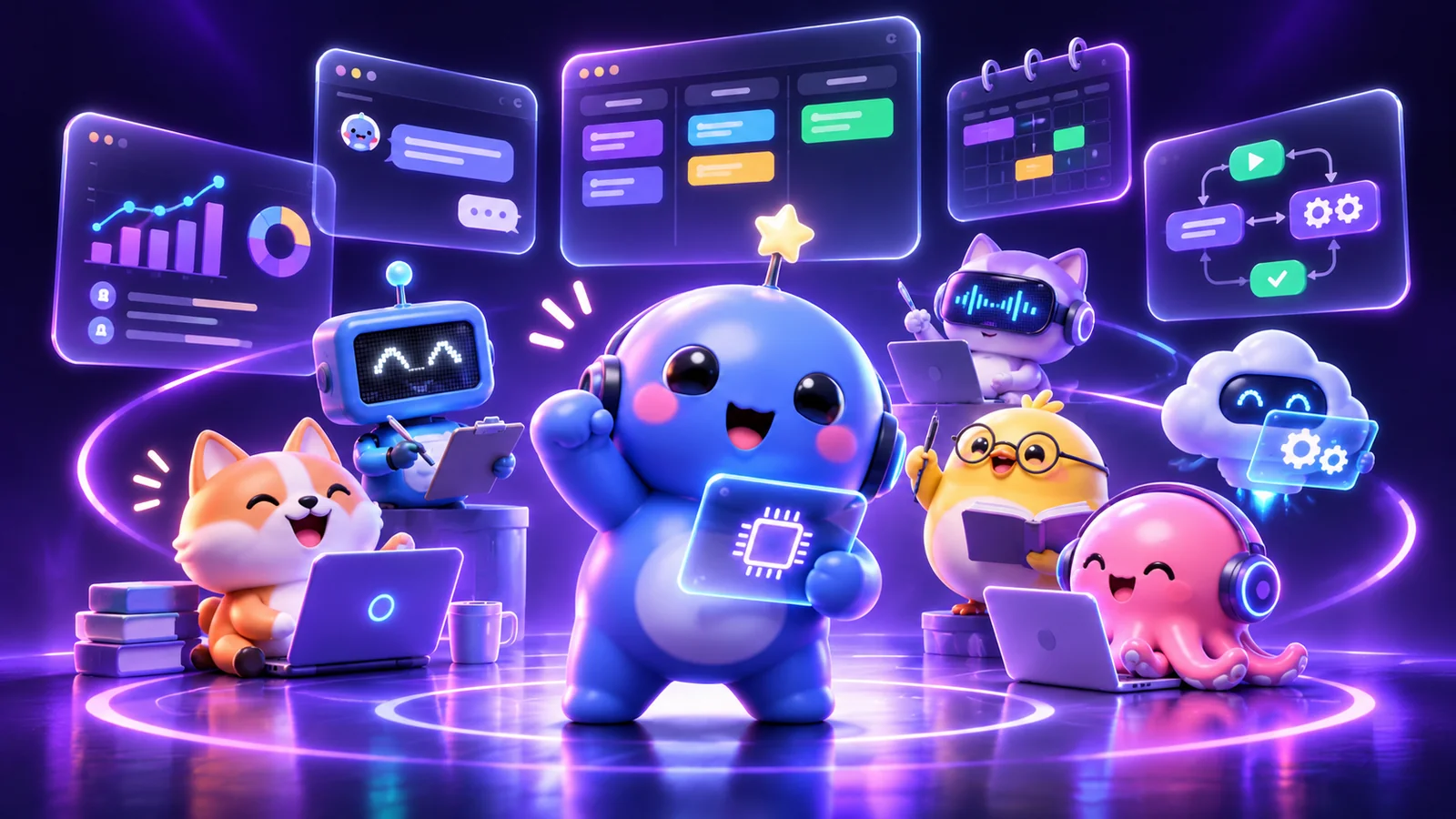
What if you could hire an entire team without spending months recruiting, training, and managing new employees?
An AI sales representative that researches potential customers while you sleep. An AI marketing employee that monitors your competitors. An AI researcher that turns market information into actionable opportunities. An AI personal assistant that coordinates the entire operation.
Each with its own computer, connected applications, specialized responsibilities, and the ability to collaborate with other agents.
This is the emerging reality of autonomous AI employees.
With the introduction of Meta Muse, Grok Bot, ChatGPT Dots, Claude Cowork, Manus AI, and increasingly sophisticated business automation platforms, artificial intelligence is evolving from something you talk to into something you delegate work to.
But businesses need more than another intelligent assistant.
They need execution.
That’s where Prosyo AI Agents introduces a different approach: an entire digital workforce designed around real business responsibilities.
Whether you’re a solo entrepreneur, startup founder, agency owner, or sales leader, this guide explains the best AI agents for 2027, how to hire AI employees, how to build an autonomous AI team, and how to automate repetitive business operations without unnecessarily expanding your headcount.
The best AI agent depends on what you want to accomplish. Some platforms specialize in personal assistance, others focus on autonomous projects, while others are designed around recurring business operations.
For businesses seeking a coordinated workforce of AI employees, Prosyo is our recommended starting point.
| AI Agent Platform | Best For | Primary Approach |
|---|---|---|
| Prosyo | AI employees and autonomous business teams | Multi-agent business execution |
| Grok Bot | General-purpose AI teammates | Cloud computer and collaborative assignments |
| Meta Muse | Everyday personal assistance | Personal AI agent |
| ChatGPT Dots | Persistent AI assistance | Ongoing responsibilities and knowledge work |
| Claude Cowork | Professional collaboration | Research and document-oriented workflows |
| Manus AI | Autonomous digital projects | General-purpose task execution |
| Lindy | Business process automation | Configurable AI assistants |
| Sintra AI | Small business AI helpers | Specialized AI roles |
| Google Gemini | Google Workspace productivity | Connected personal and professional assistance |
| Microsoft Copilot | Microsoft 365 productivity | Workplace assistance |
This comparison prioritizes practical business execution, role-based AI employees, ongoing responsibilities, and multi-agent collaboration.
It is not a benchmark of underlying language-model intelligence.
Looking to automate sales, marketing, research, and operations from one platform? Explore Prosyo AI Agents.
For most businesses, adopting AI initially meant purchasing a chatbot subscription.
Employees opened an AI application, asked questions, copied the responses, and manually transferred information into other applications.
That was a meaningful improvement over doing everything manually.
But it introduced a new bottleneck.
Humans still had to coordinate every step.
Consider a typical marketing workflow.
Someone researches competitors. Someone identifies opportunities. Someone creates a content brief. Someone writes the article. Someone prepares promotional materials. Someone monitors performance.
Even if artificial intelligence helps with every stage, the human remains responsible for connecting the entire process.
Autonomous AI agents introduce another approach.
Instead of asking AI to complete one isolated task, businesses can assign objectives, configure workflows, connect applications, and establish approval requirements.
An AI agent can then work through multiple steps toward an intended outcome.
The next evolution is having multiple agents collaborate.
One agent completes research. Another uses those findings to prepare a strategy. Another creates deliverables. A coordinating agent tracks responsibilities and identifies outstanding work.
This is the foundation of an AI workforce.
An AI employee is a software-based agent configured to perform recurring responsibilities within a business.
Unlike a general-purpose chatbot, an AI employee can be assigned a specific role, connected to relevant applications, and given instructions about how its work should be completed.
For example, an AI sales employee may be responsible for prospect research, lead qualification, campaign preparation, and response management.
An AI marketing employee may focus on competitor monitoring, advertising analysis, content opportunities, and reporting.
An AI research employee may investigate industries, evaluate companies, identify market changes, and produce structured reports.
The term AI employee describes its operational role. It does not mean that the software is a legal employee or can independently assume responsibility for business decisions.
A well-designed AI employee combines several capabilities:
Instead of starting from zero whenever work needs to be completed, businesses can configure agents around repeatable responsibilities.
That’s the difference between occasionally using artificial intelligence and incorporating AI into how a company operates.
These terms are frequently used interchangeably, but they describe different approaches to artificial intelligence.
| Capability | AI Chatbot | AI Assistant | AI Agent | AI Employee |
|---|---|---|---|---|
| Answer questions | Yes | Yes | Yes | Yes |
| Generate documents | Yes | Yes | Yes | Yes |
| Connect to applications | Varies | Often | Often | Often |
| Execute multistep tasks | Limited | Varies | Common | Common |
| Use a computer environment | Varies | Varies | Available on some platforms | Available on some platforms |
| Own recurring responsibilities | Limited | Varies | Possible | Core objective |
| Collaborate with other agents | Varies | Varies | Possible | Platform-dependent |
| Operate within defined business roles | Limited | Varies | Configurable | Core objective |
A chatbot primarily helps generate information.
An AI assistant helps a person complete work.
An AI agent can execute actions toward a defined objective.
An AI employee is an agent organized around an ongoing operational responsibility.
Businesses don’t necessarily need to choose one and abandon the others. Each can be useful depending on the complexity of the work.
However, organizations looking to automate entire workflows should evaluate platforms that go beyond conversational assistance.
Prosyo AI Agents is designed for entrepreneurs, agencies, startups, sales teams, and businesses that want more than a general-purpose personal assistant.
Instead of depending on a single AI assistant, businesses can build a team of specialized AI employees.
Prosyo combines personal assistance, application integrations, computer-based execution, task delegation, recurring responsibilities, and established business automation capabilities.
The platform introduces 21 AI agent characters and access to more than 550 application integrations, allowing users to configure different specialists around their business requirements.
See how autonomous AI employees, collaborative teams, and connected applications come together inside Prosyo.
The central idea behind Prosyo is simple: businesses operate through teams and responsibilities, not isolated prompts.
A company might need:
Each role requires different information, tools, instructions, and responsibilities.
Prosyo is designed to bring these roles into a coordinated environment.
Instead of repeatedly explaining every aspect of your business to separate AI tools, you can organize work around specialists.
One of the most important developments in agentic AI is computer use.
When an AI agent has access to an appropriate computing environment, its potential capabilities extend beyond text generation.
Depending on permissions and supported tools, an agent can interact with websites, gather information, work with files, navigate digital interfaces, and execute multistep assignments.
For example, a research agent can investigate a company instead of simply explaining how company research should be performed.
The result is a more practical form of assistance.
A single agent can be useful, but many business processes involve several connected responsibilities.
Prosyo allows users to organize specialized agents around different objectives.
A research agent can collect information. A marketing agent can use the findings to prepare a campaign. A sales agent can identify relevant prospects. A coordinator can organize the resulting work.
See how this works in the multi-agent sales workflow.
Many business operations are repetitive by nature.
Weekly competitor monitoring. Daily prospect research. Monthly marketing reports. Regular advertising performance reviews.
Rather than manually initiating every assignment, recurring workflows allow businesses to establish a more consistent operating process.
For a small company, this can reduce the number of repetitive administrative responsibilities that accumulate over time.
Autonomy does not mean unlimited authority.
Important actions should remain subject to appropriate permissions, review, and approval.
Sending external communications, publishing content, modifying business records, changing advertising budgets, or accessing sensitive information requires careful consideration.
Prosyo incorporates human approval into supported workflows so businesses can maintain oversight where necessary.
Prosyo is particularly relevant for:
Prosyo is our preferred option for businesses that want specialized AI employees working toward operational objectives.
Build your AI team with Prosyo or explore available pricing.
Grok Bot represents a significant step toward proactive artificial intelligence.
According to the official Grok Bot documentation, the platform provides AI teammates with access to a cloud computing environment.
This allows users to delegate tasks that require more than conversational responses.
Grok Bot is particularly relevant for research, technical work, monitoring, reporting, and general-purpose digital assignments.
Its teammate-oriented positioning also reflects a broader shift in how people interact with AI.
Instead of treating artificial intelligence as a tool they occasionally open, users can incorporate AI into ongoing work.
Both approaches recognize the importance of AI that can execute assignments.
The distinction is business specialization.
Prosyo is designed around a workforce with defined operational roles, including sales, marketing, prospect research, and campaign execution.
For businesses looking for a Grok Bot alternative, the important consideration is whether they want flexible general-purpose teammates or a platform organized around specific business responsibilities.
Meta Muse introduces a personal AI agent designed to help users complete everyday tasks.
Meta describes Muse Secure VM as a persistent, isolated computing environment that includes browser access.
This creates opportunities for personal research, planning, digital organization, and multistep assistance.
Rather than requiring users to manually complete every action suggested by AI, Muse can help carry out supported assignments.
Personal productivity and business operations have overlapping requirements, but they are not identical.
A personal assistant may help organize appointments, research purchases, or plan activities.
A business might need several specialists working simultaneously across customer acquisition, market research, marketing campaigns, and operational coordination.
For entrepreneurs evaluating a Meta Muse alternative for business, Prosyo offers a workforce-oriented approach built around specialized AI employees.
OpenAI’s introduction of Dots demonstrates how AI assistance is expanding beyond individual conversations.
Dots can retain relevant context, use cloud computers, interact with connected applications, and make progress on ongoing responsibilities.
This makes them interesting for professionals managing research, analysis, administrative tasks, and recurring knowledge work.
ChatGPT Work also supports more substantial assignments across files, applications, and websites.
The question for businesses is not simply whether AI can perform work.
It is how that work is organized.
Prosyo focuses on coordinating specialized business employees, with particular emphasis on prospect research, sales workflows, marketing, and business operations.
Businesses seeking a ChatGPT Dots alternative can explore the broader Prosyo vs. ChatGPT Work comparison and Prosyo vs. ChatGPT.
Claude is particularly relevant for users working with complex documents, analytical assignments, software development, and professional research.
Claude Cowork brings AI closer to practical workplace collaboration.
Users can delegate substantial knowledge-oriented assignments and work with AI on more sophisticated deliverables.
For analysts, consultants, developers, and professional teams, this approach can be valuable.
Professional knowledge work and operational automation serve different business needs.
A research report may require sophisticated reasoning.
An ongoing customer acquisition workflow also requires lead discovery, qualification, outreach, communication management, and coordination.
Businesses should consider both the quality of the underlying intelligence and the operational environment surrounding it.
Read the Prosyo vs. Claude comparison to explore these differences.
Manus AI helped popularize the idea of assigning complete projects to artificial intelligence.
Rather than asking for individual responses, users can delegate research assignments, data analysis, digital creation, and other multistep projects.
This is useful when someone wants to move from an idea toward a completed deliverable.
Completing a project is different from managing an ongoing responsibility.
Preparing a market research report is a project.
Monitoring the market every week, identifying new opportunities, and communicating those opportunities to a sales team is an ongoing business function.
Prosyo focuses on organizing these responsibilities across specialized AI employees.
Explore the Prosyo vs. Manus AI comparison if you’re looking for a Manus alternative for recurring business operations.
Lindy provides a way to build AI assistants around repeatable business processes.
Its approach is attractive to organizations that need application integrations and automation for administrative or operational workflows.
For businesses that want to configure individual assistants around particular responsibilities, Lindy is a relevant option.
Prosyo takes a workforce-oriented approach that also incorporates established prospecting, outreach, and sales execution capabilities.
Read Prosyo vs. Lindy before choosing a platform for your AI employees.
Sintra has helped make the concept of role-based AI employees more accessible to small businesses.
Its official AI employee documentation describes specialized roles across marketing, sales, customer support, recruiting, content creation, and other business areas.
Sintra also offers team conversations, scheduling, and configurable helpers.
Businesses comparing these products should evaluate computer use, application integrations, collaboration, approval mechanisms, recurring workflows, and practical execution quality.
The Prosyo vs. Sintra comparison explores which approach may suit different business requirements.
Google Gemini is particularly relevant for individuals and businesses that already depend on Google applications.
Its integration with Google’s broader ecosystem makes it attractive for research, communication, documents, and workplace productivity.
Businesses that need dedicated sales employees or coordinated operational specialists should also evaluate platforms designed around those responsibilities.
Explore Prosyo vs. Google Gemini to understand the different approaches.
Microsoft Copilot offers artificial intelligence within Microsoft’s broader productivity ecosystem.
Organizations relying on Microsoft 365 may benefit from assistance that connects naturally with their existing applications and work environments.
However, businesses should distinguish between improving individual employee productivity and deploying a coordinated digital workforce.
See Prosyo vs. Microsoft Copilot for a closer look.
Purchasing several AI subscriptions does not automatically create an AI team.
A functional workforce needs clear responsibilities, defined workflows, authorized tools, coordination, and measurable outcomes.
The simplest approach is to start with the work your business already performs.
Which activities happen every day? Which responsibilities are repetitive? Where does information get lost? Which processes consistently consume time without requiring high-level strategic judgment?
Once these responsibilities are identified, they can be assigned to suitable AI employees.
A small B2B company might begin with three roles.
An AI researcher identifies relevant prospects. An AI sales employee prepares outreach and follow-up activities. An AI coordinator monitors progress and requests human approval when necessary.
As those workflows become reliable, the business can introduce marketing, customer support, and operational specialists.
The objective is not having the largest number of AI agents.
It is building a system where each agent has a useful purpose.
Explore how multiple AI agents can work together to launch a new service.
Sales development is one of the most practical applications of autonomous AI employees.
Finding relevant prospects, researching their companies, preparing personalized communication, and organizing follow-ups are time-consuming responsibilities.
Penny, Prosyo’s AI SDR, is designed to support customer acquisition workflows.
Instead of manually moving between separate prospecting and outreach applications, businesses can organize these activities within a more connected process.
The sales team can spend more time evaluating opportunities and participating in meaningful customer conversations.
Most businesses don’t need more random contacts.
They need relevant companies with a credible reason to purchase their services.
An AI prospecting agent can assist with identifying target companies, researching publicly available information, organizing qualification criteria, and preparing useful prospect records.
For a web development agency, this could mean finding businesses whose websites show opportunities for improvement.
For a recruitment company, it could mean identifying organizations advertising relevant open positions.
For a SaaS business, it could mean discovering companies that fit a defined ideal customer profile.
Explore AI-powered multichannel lead generation.
Local prospecting is an especially relevant workflow for agencies, consultants, and service providers.
An AI employee can assist with discovering businesses within a specified location and industry, organizing publicly available company information, and preparing lists for qualification.
A marketing agency might search for dental clinics in a particular city.
A software company might research independent retailers.
A web agency might identify potential website improvement opportunities.
See how AI-powered Google Maps lead generation can support this process.
The timing of sales outreach matters.
A company that recently raised funding, expanded its team, launched a new service, or began hiring may have emerging requirements.
Instead of sending generic messages to thousands of companies, businesses can focus on prospects with relevant signals.
An AI research employee can assist with identifying these developments and preparing contextual notes.
Explore funding-round-based prospect research and hiring-signal outreach.
The objective is improving relevance while maintaining responsible communication practices.
Effective outbound campaigns require coordination.
A prospect who replies on LinkedIn should not continue receiving unrelated automated follow-ups.
Personalization should reflect actual research rather than invented observations.
Campaigns should respect applicable communication laws, platform rules, and recipient preferences.
Prosyo combines LinkedIn outreach, multichannel sequences, and AI personalization with sales-oriented workflows.
This allows businesses to evaluate a connected customer acquisition system instead of managing each communication channel separately.
Marketing departments manage an enormous number of recurring responsibilities.
Campaign analysis. Competitor monitoring. Content planning. Email marketing. Reporting. Opportunity discovery.
For a small business, these activities can quickly become overwhelming.
An AI marketing employee can assist with collecting performance information, identifying patterns, preparing campaign recommendations, and organizing marketing priorities.
See the weekly Google and Meta Ads review workflow.
Campaign changes and spending decisions should remain subject to appropriate human review.
SEO requires ongoing attention.
Search behavior changes. Competitors publish new pages. Existing content loses visibility. New opportunities emerge.
An AI employee can assist with keyword analysis, competitor research, content auditing, and identifying opportunities.
For example, an agent could prepare a weekly list of competitor keywords your website does not currently target.
Another agent could investigate declining content and suggest improvements.
Explore AI keyword gap analysis and AI-powered content decay research.
This allows marketing teams to spend more time evaluating strategy instead of manually assembling research.
Imagine receiving a report every Monday covering meaningful changes across your competitors.
New products. Updated pricing. Changed positioning. Customer complaints. Recently published content.
An AI researcher can assist with monitoring relevant public information and organizing the findings.
For SaaS companies, agencies, and ecommerce businesses, this could become a valuable recurring responsibility.
The automated competitor monitoring workflow illustrates how businesses can move from occasional research to ongoing competitive intelligence.
The findings should always remain connected to evidence rather than unsupported assumptions.
Launching a new product requires coordination between research, marketing, sales, content, and operations.
A founder may have the strategy but lack the resources to execute every component efficiently.
An AI team could assist with researching the market, developing campaign ideas, preparing landing page content, organizing launch materials, and identifying potential customers.
A coordinating agent can help organize dependencies across these responsibilities.
Explore the AI product launch planning workflow.
Rather than starting every assignment from scratch, businesses can establish a structured process for future launches.
Customer feedback is valuable only when businesses act on it.
An unhappy customer may leave a negative rating. A recurring complaint may indicate a product issue. A frequently asked question may reveal a gap in documentation.
An AI support employee can assist with reviewing feedback, organizing recurring problems, and preparing relevant responses.
Prosyo’s negative customer rating follow-up workflow demonstrates how these activities can become recurring responsibilities.
Human support teams remain important for sensitive complaints, contractual matters, complex troubleshooting, and decisions requiring judgment.
Producing content consistently is difficult when a business depends on one person for research, writing, editing, distribution, and reporting.
An AI workforce can assist with dividing these responsibilities.
One agent researches topics. Another prepares content drafts. Another organizes supporting materials. Another assists with distribution planning.
A webinar, for example, can provide material for several articles, social posts, newsletters, and educational resources.
Explore the AI webinar content repurposing workflow.
Human editorial oversight remains essential for accuracy, originality, brand consistency, and publishing quality.
Entrepreneurs frequently make expensive decisions with incomplete market information.
Before launching a new service or developing a product, they need to understand existing competitors, customer requirements, pricing approaches, and distribution channels.
An AI research employee can assist with collecting information and preparing structured analysis.
This makes the early investigation process more organized.
However, desk research should not replace conversations with real customers or actual market validation.
Explore AI market research before launching a business.
Fundraising requires targeted research.
Sending the same pitch to hundreds of investors rarely creates a meaningful advantage.
Founders need to identify investors interested in their industry, company stage, geography, and business model.
An AI research employee can assist with organizing publicly available investor information, identifying relevant investment themes, and preparing contextual notes.
This AI investor research workflow is designed around that requirement.
The objective is helping founders prioritize relevant conversations rather than automating indiscriminate communication.
Managing projects often involves organizing the work before execution can even begin.
Responsibilities need to be defined. Dependencies need to be identified. Tasks need to be assigned. Progress needs to be reviewed.
An AI project coordinator can assist with translating objectives into structured project plans.
Through connected project management applications, the resulting information can become part of an existing workflow.
Explore AI project planning with ClickUp and monday.com.
A human project owner should remain responsible for priorities, resource decisions, and final commitments.
A founder’s most valuable time is frequently consumed by coordination.
Reviewing information. Identifying priorities. Checking whether assignments are progressing. Deciding what should happen next.
An AI chief of staff can assist with organizing information across connected responsibilities and helping coordinate multiple AI specialists.
Instead of repeatedly checking separate applications, a founder can establish structured workflows that produce relevant summaries and actionable next steps.
This is where a coordinated AI workforce becomes more interesting than a collection of unrelated automation tools.
Ready to build your own digital workforce? Discover Prosyo AI Agents.
The answer depends on what you mean by replacing a team.
AI employees can potentially automate defined responsibilities currently performed by humans.
They can help research information, prepare documents, organize workflows, monitor changes, and execute supported digital tasks.
But replacing every human responsibility is a fundamentally different proposition.
Businesses still need accountability, leadership, customer relationships, strategic judgment, negotiation, specialized expertise, and oversight.
A more practical objective is replacing repetitive workloads before replacing entire roles.
Consider a small agency.
Its founder spends several hours researching potential customers. A sales employee prepares messages and manages follow-ups. A marketing employee collects information for campaign reports. A coordinator maintains project information.
Some of these responsibilities may be suitable for AI assistance.
Automating them could give the existing team greater capacity without requiring immediate additional hiring.
For a solo founder, the opportunity may be avoiding the need to build several departments before the business can grow.
The economics depend on actual task quality, reliability, supervision requirements, and operational costs.
AI employees should be evaluated through results rather than assumptions about headcount reduction.
The potential financial value of AI employees comes from several areas.
Reduced repetitive work. Faster information gathering. More consistent execution. Lower administrative overhead. Increased operational capacity.
Consider an illustrative small business that spends 160 hours per month on repetitive digital activities.
Suppose it can responsibly automate 40% of those activities.
That represents 64 hours of potentially recovered working time.
At an effective labor cost of $25 per hour, those hours correspond to $1,600 in monthly labor capacity.
If the combined cost of AI subscriptions, additional usage, and supervision is $400 per month, the hypothetical net capacity value is $1,200.
| Metric | Illustrative Example |
|---|---|
| Monthly repetitive work | 160 hours |
| Share successfully automated | 40% |
| Potential time recovered | 64 hours |
| Effective hourly labor cost | $25 |
| Gross capacity value | $1,600 |
| AI and supervision costs | $400 |
| Potential net capacity value | $1,200/month |
These are illustrative assumptions, not measured Prosyo customer results.
Recovered working time does not automatically become cash savings. Its value depends on whether the business can use that capacity productively or avoid other expenses.
The correct way to evaluate an AI workforce is to measure completed work against its actual operating costs.
Compare available plans on the Prosyo pricing page.
Businesses should avoid evaluating AI agents purely through subscription prices.
A cheap agent that frequently fails may become expensive.
A more expensive workflow that reliably produces useful outputs may deliver greater value.
Measure:
A useful starting formula is:
Monthly net capacity value = Value of successfully recovered working time − AI operating and supervision costs.
For sales-oriented workflows, businesses should additionally evaluate qualified opportunities, conversations, meetings, and revenue attributable to the process.
A successful AI workforce should make business operations more efficient without introducing disproportionate risk or unnecessary complexity.
Getting started doesn’t require automating an entire company.
The most effective approach is to begin with one clearly defined responsibility.
Select an activity that happens frequently and has a reasonably measurable output.
Prospect research, competitor monitoring, advertising reports, and project summaries are useful examples.
Avoid starting with high-risk decisions that require complex judgment.
Specify what the agent should accomplish.
Describe the expected output, relevant constraints, available resources, and circumstances requiring human review.
A vague instruction such as “grow my business” is difficult to evaluate.
A structured instruction such as “research 20 companies matching these qualification criteria and prepare a sourced prospect report every Monday” creates a clearer objective.
Give the agent access only to the tools and information necessary for its responsibilities.
Depending on the workflow, this may include research tools, project management applications, communication services, marketing platforms, or business databases.
Avoid granting unnecessary permissions.
Decide which actions can happen automatically and which require review.
Researching publicly available information is different from publishing content, sending external messages, spending money, or modifying important records.
Appropriate approval requirements help maintain accountability.
Examine the quality of the results.
Check factual accuracy, completeness, relevance, execution quality, and whether the agent followed its instructions.
Provide clear feedback and refine the workflow.
Once the workflow is reliable, introduce a recurring schedule where supported.
This transforms occasional AI assistance into an ongoing operational responsibility.
Introduce additional specialists when they serve a clear purpose.
Connect their responsibilities so that one agent’s useful output can become another agent’s input.
You can begin exploring these capabilities through Prosyo AI Agents.
A small business does not necessarily need 20 AI employees on its first day.
A carefully organized team of five specialists could provide a useful starting point.
| AI Employee | Primary Responsibility |
|---|---|
| AI Chief of Staff | Coordinate priorities and assignments |
| AI Researcher | Discover prospects, competitors and opportunities |
| AI Sales Employee | Assist with lead generation and outreach |
| AI Marketing Employee | Prepare campaigns, analysis and reports |
| AI Content Employee | Support content production and distribution planning |
Each employee should have a clearly defined purpose.
The researcher should not independently decide advertising budgets.
The content employee should not access sensitive customer records without a legitimate requirement.
The sales employee should follow established qualification rules and communication policies.
The more clearly responsibilities are defined, the easier it becomes to evaluate the workforce.
For many startups, sales development becomes expensive before revenue becomes predictable.
Recruitment, onboarding, prospecting tools, data subscriptions, campaign management, and training all introduce costs.
A coordinated AI sales workflow can help founders establish a more structured customer acquisition process before expanding their human sales team.
The workflow might include:
Prosyo brings several of these responsibilities together through its existing AI outbound agent, intent signals, outreach capabilities, and unified inbox.
An AI sales team should prioritize relevance and genuine conversations over message volume.
For small businesses, the opportunity is developing repeatable customer acquisition workflows without unnecessary operational overhead.
Traditional automation usually follows predefined rules.
When an event happens, a connected action occurs.
For example, when a form is submitted, information can be added to a customer database.
This is useful because predictable processes do not necessarily require sophisticated intelligence.
AI agents introduce greater flexibility.
An agent can potentially interpret information, evaluate multiple steps, choose appropriate tools, and adapt its approach based on available context.
A coordinated AI workforce adds another dimension: multiple specialists working on related responsibilities.
Traditional automation, individual agents, and multi-agent systems can coexist.
A reliable business should not use an AI model when a simple deterministic automation would be more appropriate.
Likewise, rigid automation may be insufficient when work requires research, interpretation, and adaptation.
The strongest operating model combines the appropriate technology for each responsibility.
Before choosing an AI agent platform, evaluate these eight important areas.
Can the agent interact with the environments required to complete your workflows?
Computer use may be helpful when work involves websites or applications without suitable direct integrations.
Does the platform support the services your business already uses?
A large integration library is useful only when the relevant connections support the actions your workflows require.
Can you configure AI employees around clearly defined responsibilities?
Specialization can make instructions easier to manage and results easier to evaluate.
Can different agents coordinate assignments and exchange relevant outputs?
This becomes particularly important when a workflow spans sales, marketing, research, and operations.
Can the system support ongoing responsibilities instead of only individual assignments?
Businesses benefit from predictable workflows that produce useful outputs on a consistent basis.
Can users review important actions before they occur?
The ability to maintain oversight is particularly important for external communication, financial decisions, sensitive information, and publishing.
Does the agent consistently complete its responsibilities accurately?
Evaluate real assignments rather than relying only on promotional demonstrations.
What does a successful workflow cost after considering subscriptions, computational usage, application fees, and supervision?
The best AI workforce is not simply the cheapest. It is the one that delivers useful, reliable work at a sustainable cost.
The rapid emergence of personal agents, cloud computers, autonomous execution, and coordinated AI systems suggests that businesses are entering a new stage of artificial intelligence adoption.
The previous generation of tools primarily increased access to information.
The next generation could increase access to execution.
This has important implications for startups.
A small company may be able to research markets more consistently, launch campaigns faster, organize sales operations more effectively, and manage recurring responsibilities with less manual coordination.
For agencies, it could create opportunities to improve service delivery and customer acquisition.
For founders, it could mean spending more time on strategy, product development, customer relationships, and business decisions.
However, the organizations that benefit most are unlikely to be those that simply purchase the largest number of AI tools.
They will be the organizations that define clear objectives, establish reliable workflows, measure outcomes, manage permissions responsibly, and continuously improve execution.
The future of AI agents is not only about intelligence.
It is about how intelligence becomes organized into useful work.
Prosyo is our recommended option for businesses seeking specialized AI employees, multi-agent collaboration, sales automation, and recurring operational workflows. Meta Muse, Grok Bot, ChatGPT Dots, Claude, Manus, and Lindy provide alternative approaches suited to different requirements.
Businesses looking for AI workforce software should evaluate specialized roles, collaboration, computer use, integrations, recurring workflows, approval controls, and total operating costs. Prosyo is designed around this workforce-oriented approach.
Yes. AI employee platforms allow businesses to configure software agents around defined responsibilities such as research, marketing, prospecting, content preparation, and operational coordination.
AI employees can potentially automate parts of existing human responsibilities. They cannot reliably replace every aspect of human judgment, accountability, expertise, and customer relationships. Begin by automating appropriate workloads.
Prosyo is a relevant alternative for businesses that need specialized AI employees and coordinated operational workflows rather than primarily personal assistance.
Prosyo is worth evaluating for sales, marketing, research, and multi-agent business execution. Grok Bot remains relevant for general-purpose AI teammate requirements.
Businesses requiring role-based AI employees and integrated customer acquisition workflows can evaluate Prosyo as an alternative to general-purpose persistent AI assistance.
Prosyo is designed around recurring business responsibilities and specialized employees, while Manus is associated with autonomous project execution. The best choice depends on the workflow.
Some AI agent platforms provide cloud computing environments that allow agents to work with browsers, files, applications, and other authorized digital resources.
Yes. Multi-agent platforms can support collaboration, communication, and task delegation between specialized agents. Reliability depends on the platform and workflow configuration.
Some cloud-hosted agents can continue assigned or scheduled work independently of a user’s local computer. Actual execution depends on service availability, permissions, usage limits, and workflow requirements.
Yes. Platforms such as Prosyo support workflows involving prospect research, qualification, outreach preparation, campaign management, and communication organization.
AI agents can assist with discovering potential companies, evaluating qualification criteria, researching relevant information, and preparing prospect records. Actual lead quality depends on targeting, data accuracy, and execution.
Small businesses may benefit particularly from automating recurring responsibilities because limited staff often manage several departments simultaneously. Start with a measurable workflow and expand gradually.
Costs vary based on platform subscriptions, usage allowances, application integrations, computational requirements, and supervision. Review Prosyo pricing to understand available options.
Start by identifying repetitive business responsibilities, configuring specialized agents, connecting necessary applications, establishing permissions, and testing execution quality. Then introduce coordination and recurring workflows.
The AI market is crowded with intelligent assistants.
But businesses do not succeed simply because they have access to more information.
They succeed by executing the right responsibilities consistently.
Meta Muse, Grok Bot, ChatGPT Dots, Claude, Manus, and other platforms demonstrate how rapidly artificial intelligence is evolving toward autonomous assistance.
Prosyo takes that opportunity into business operations through specialized AI employees, computer-based execution, coordinated teams, and practical customer acquisition workflows.
For entrepreneurs, agencies, SaaS founders, sales teams, and small businesses, the opportunity is clear.
You don’t necessarily need another chatbot.
You may need an AI researcher.
An AI sales employee.
An AI marketing specialist.
An AI personal assistant.
An entire team working toward your business objectives.
Start with one responsibility. Measure the results. Expand the team when the execution proves valuable.
Your next competitive advantage could be an AI workforce.
Build Your AI Team With Prosyo
Explore Pricing | Start Your Free Trial
Editorial note: Published by Prosyo. Product recommendations prioritize business automation and coordinated AI workforce use cases. This guide reflects product capabilities available or publicly described as of November 2026 and looks ahead to 2027. Comparisons are not independent head-to-head performance benchmarks. Features, pricing, and availability may change.


New courses, plays that are booking meetings right now and the occasional teardown. No fluff, unsubscribe any time.
2 days free, full access. Pay later and change your mind? Full refund within 7 days.