Outbound Sales
September 21, 2026
10 min read


Most B2B teams do not have an outreach-volume problem. They have a coordination problem.
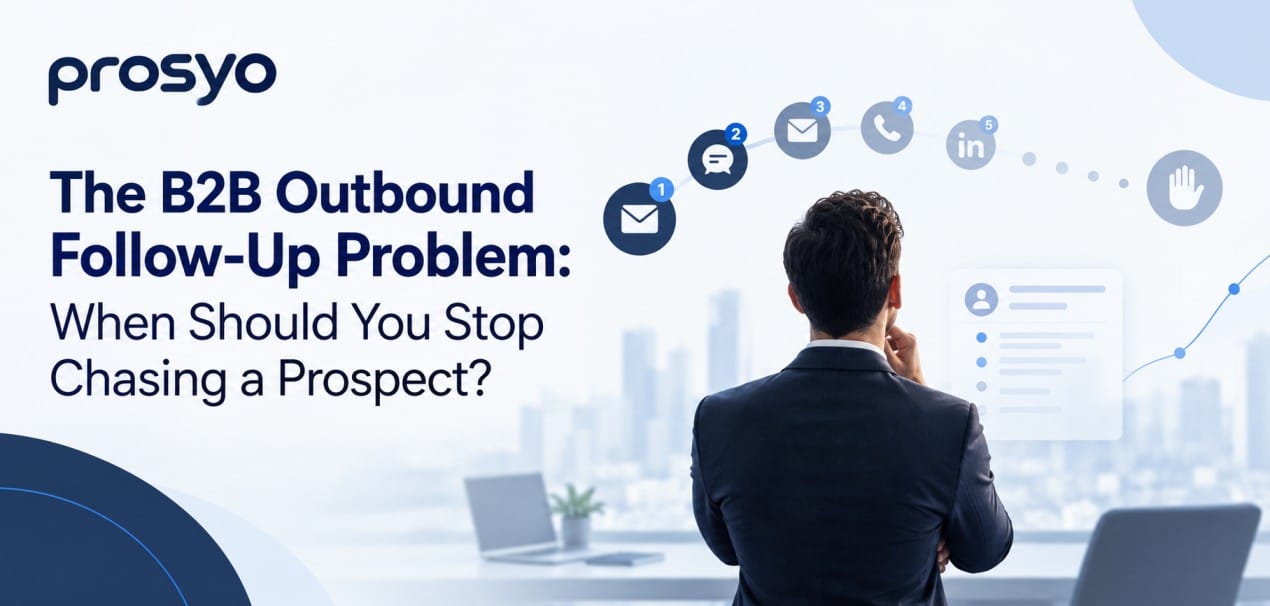
A prospect sees a LinkedIn connection request on Monday, receives a cold email on Tuesday, gets another generic email on Thursday, and then receives a LinkedIn message that acts as if none of those touches happened. Each individual step may look acceptable inside a campaign tool. Together, the experience feels automated.
That is the real reason multichannel outreach matters in 2026. It is not about adding more channels for the sake of activity. It is about creating one coherent conversation across the places your buyers already work.
This guide explains how to build a practical LinkedIn + email outreach system, how to sequence touches without overwhelming prospects, where AI personalization helps, and where automation should stop.
Multichannel outreach is a sales prospecting approach that coordinates several communication channels inside one campaign or workflow. For B2B teams, the most useful combination is usually LinkedIn and email because the two channels solve different parts of the same problem.
The important word is coordinated. Sending LinkedIn messages and cold emails from two unrelated tools is technically multichannel, but it often creates duplicate touches, poor timing and messy reply handling. A real multichannel workflow uses shared prospect data, shared campaign logic and one view of the conversation.
There is a common mistake in outbound sales: teams add channels when the original message is not working. A weak email sequence becomes a weak email sequence plus a LinkedIn sequence. That creates more activity without creating more relevance.
A better model is to give each channel a job.
A profile visit, follow, thoughtful engagement or concise connection request can make your name familiar before you ask for time. This works especially well when your target market is narrow and your buyers are active on LinkedIn.
Email is where you can say, in a few sentences: this is why I picked you, this is the problem I think may matter, this is how we help, and this is the next step.
A follow-up should not be a rewritten version of “just checking in.” It should introduce a different reason to reply: a relevant observation, a useful example, a small idea, a trigger at the prospect’s company or a simpler question.
When those touches are planned as one journey, outbound feels deliberate rather than repetitive.
There is no universal sequence that works for every market. Deal size, sales cycle, brand awareness, region and buyer seniority all matter. But the following structure is a sensible starting point for a B2B team selling a considered product or service.
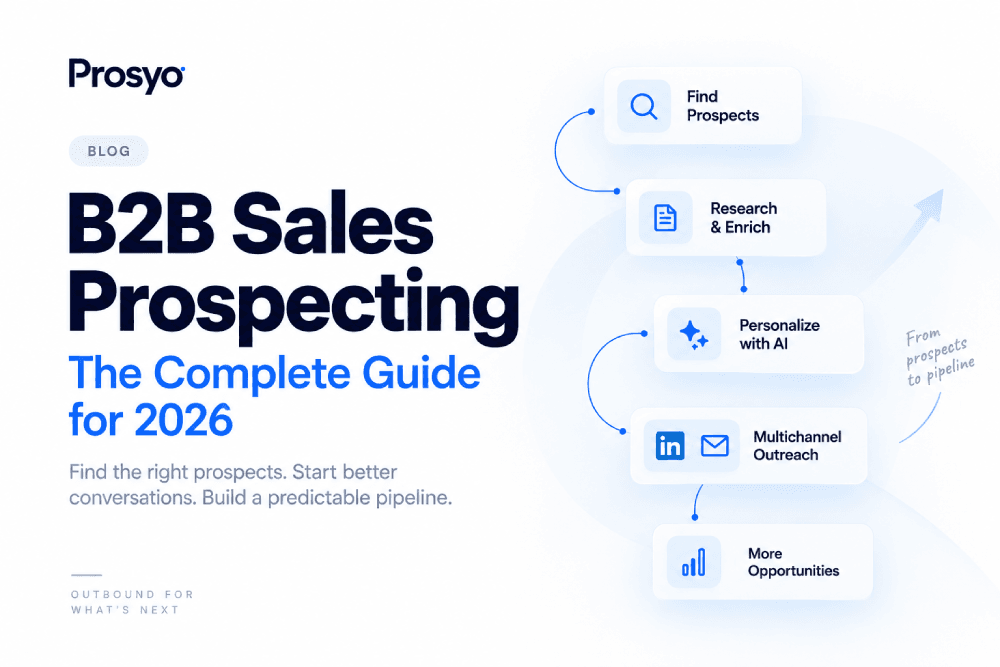
Do not start with the message. Start with the list.
Define the account criteria first: industry, company size, geography, technology, business model, hiring activity, funding stage or another signal that actually changes the likelihood of buying. Then define the people inside those accounts who own the problem.
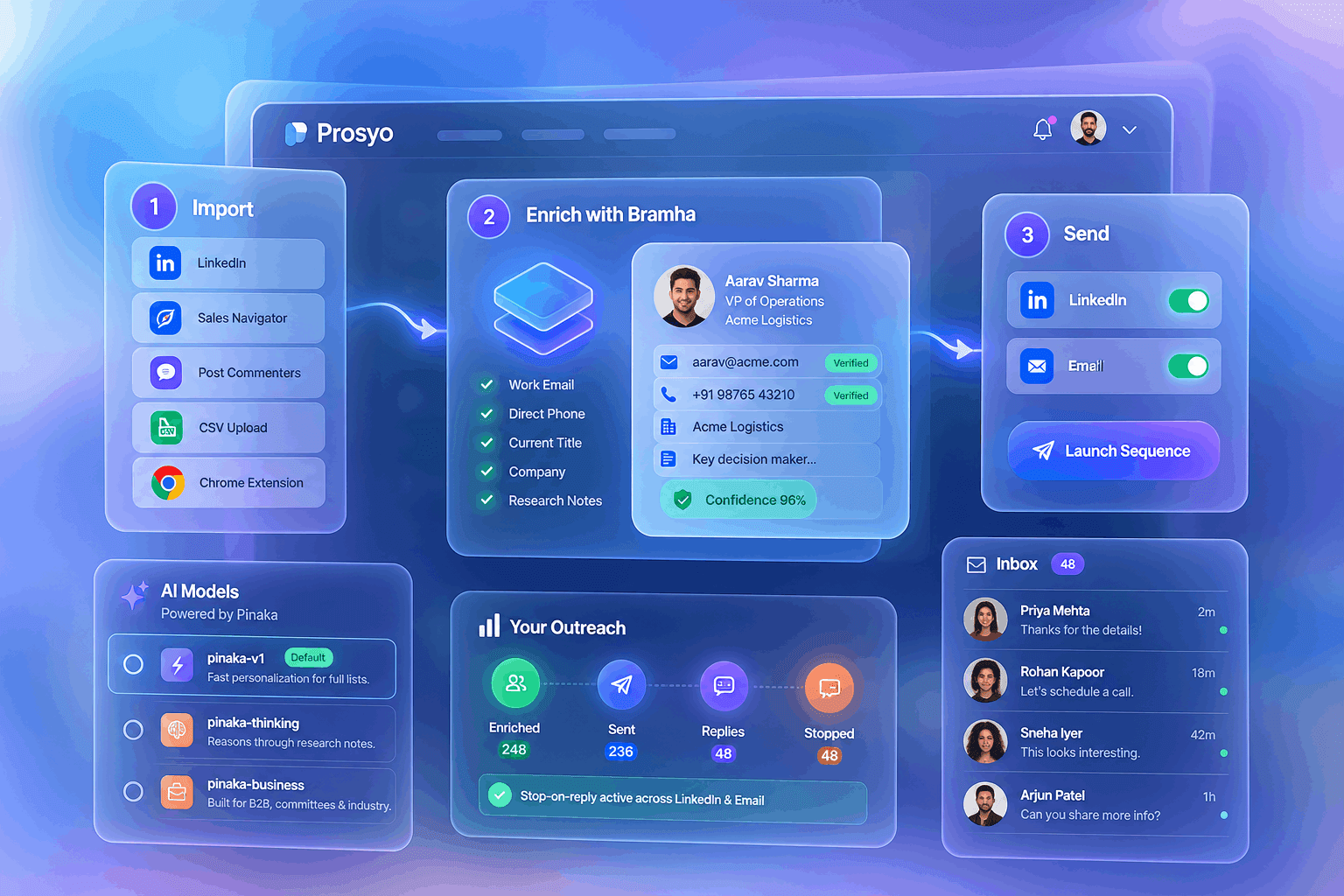
Prosyo’s prospecting workflow is built around this idea: turn an ICP into an outreach-ready audience before launching the campaign.
Visit the profile or follow the prospect where appropriate. If you send a connection request, keep it short. A connection note is not a landing page. You do not need to explain the company history, list every feature or ask for a meeting immediately.
The first email should be easy to scan on a phone. A strong structure is:
The opening line matters because it proves the message was intended for this person. This is where AI icebreakers can save research time, provided they are grounded in real prospect context rather than invented compliments.
If the prospect accepted your connection request, continue the same conversation. Do not pretend the email never happened. A natural LinkedIn message can be much shorter than the email and reference the same business problem from a different angle.
This is the right place for a short case example, a benchmark, an observation about their current motion or a concrete idea. Avoid bloated attachments and long sales decks unless the prospect has already shown interest.
Close the loop without manufacturing urgency. Give the prospect a simple way to say “not a priority” and make it clear why the conversation may be worth reopening later.
AI changed outbound because it can process more account and prospect context than a rep can manually review for every lead. But it also made bad personalization easier to scale.
The distinction is simple: good AI personalization compresses research; bad AI personalization manufactures relevance.
Useful inputs include:
From those inputs, AI can generate a first-line observation, adapt the value proposition, select an appropriate proof point and change the CTA based on persona. That is much more useful than inserting the prospect’s first name into a generic template.
Prosyo’s AI personalization is designed around campaign-level context so teams can personalize at scale without rebuilding every message manually.
One of the biggest opportunities in modern outbound is reducing the gap between “we know who we want to reach” and “the campaign is ready.” Instead of configuring every step manually, a sales team should be able to describe the ICP, offer and objective in plain language and generate a sensible starting campaign.
That is where one-click campaign generation becomes valuable. The AI can propose the sequence, channel mix, timing, first liners, message variants and follow-ups. The rep still owns the strategy and final quality, but the setup work falls dramatically.
The rule is the same as with any automation: faster execution magnifies the quality of the input. A vague ICP and generic offer will simply produce a generic campaign faster.
A message written for “SaaS founders” will almost always sound broader than a message written for “founders of 20–100 person B2B SaaS companies with an outbound sales team.” Better segmentation makes personalization easier.
Do not open with “I loved your inspiring journey” because an AI found a biography paragraph. Relevance beats flattery.
A LinkedIn DM should not be an email squeezed into a chat bubble. Keep social touches conversational and emails structured.
Few things make automation more obvious than sending a scheduled follow-up after a prospect has already responded. Your outbound system should immediately pause automated touches and move the conversation into a unified inbox.
Automation should remove repetitive work, not remove judgment. Reps need the ability to review AI-generated messages, change sequence logic and take over promising conversations.
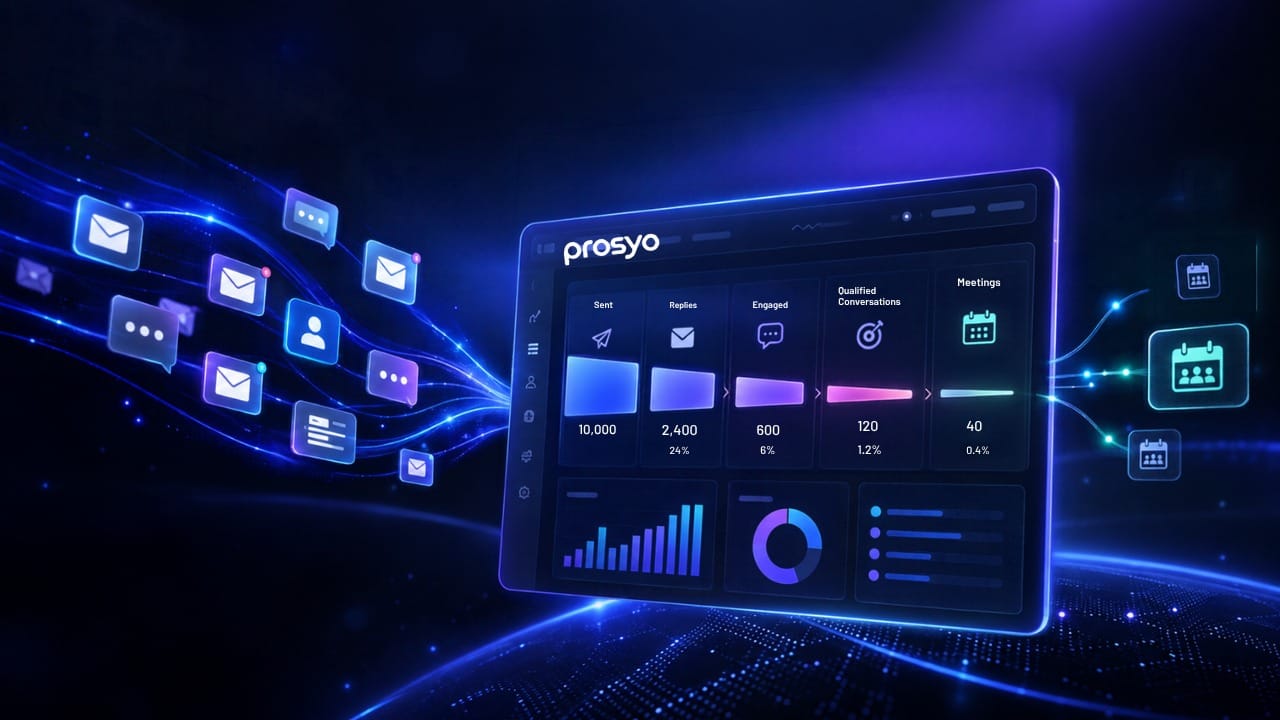
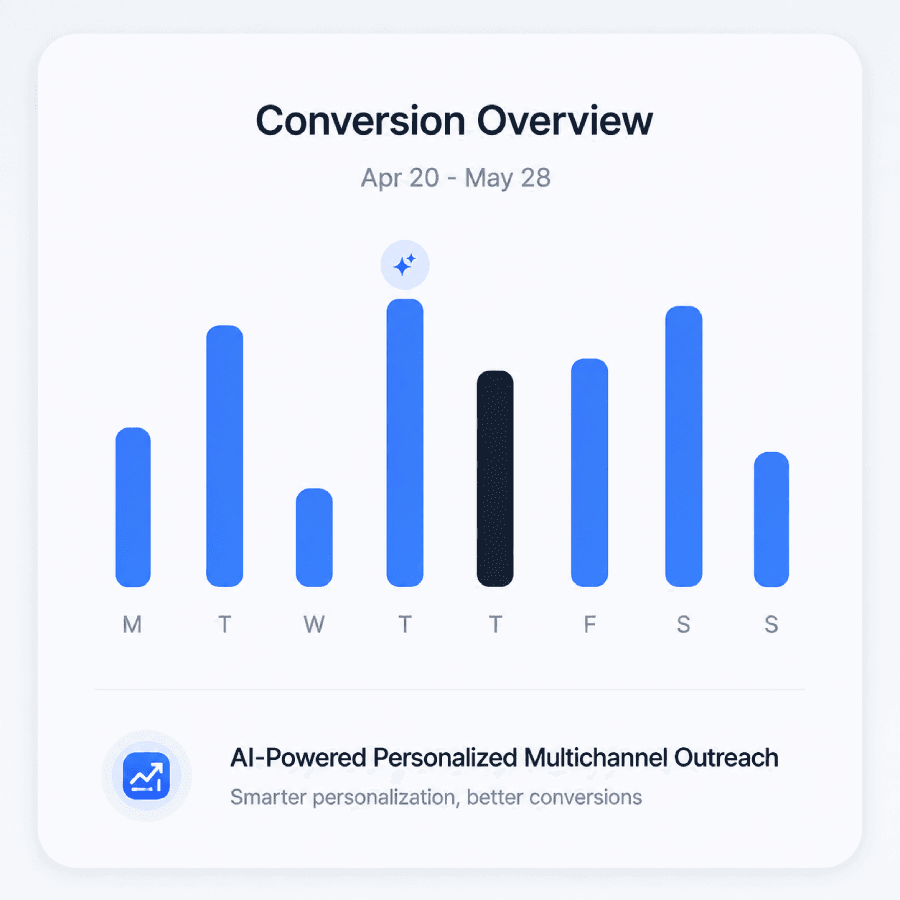
Open rates and connection acceptance can help diagnose a campaign, but they are not the business outcome. A modern outbound dashboard should separate activity metrics from revenue metrics.
The purpose of analytics is not to celebrate volume. It is to make the next campaign more precise.
You can run a very small outbound motion manually. In fact, founders testing a new market often should. The moment you have repeatable ICP criteria, more than one sender, multiple sequences, enrichment, LinkedIn tasks, email steps and replies arriving across channels, manual coordination becomes the bottleneck.
That is where a connected platform matters. Prosyo brings prospecting, LinkedIn + email sequences, AI personalization and reply management into one outbound workspace. The goal is not “more automation.” The goal is fewer disconnected steps between finding the right buyer and having a real sales conversation.
Before you launch, answer five questions:
If those answers are strong, AI and automation can make the system faster. If they are weak, no sequence builder will rescue the campaign.
The best multichannel outreach in 2026 does not feel multichannel to the buyer. It feels like one relevant conversation that happens to move between LinkedIn and email.
Use automation to handle list preparation, campaign setup, research, personalization, timing and repetitive follow-ups. Keep humans focused on positioning, judgment and the conversations that deserve attention.
If you want to build the entire workflow in one place, explore Prosyo or review the plans to start a LinkedIn + email campaign.